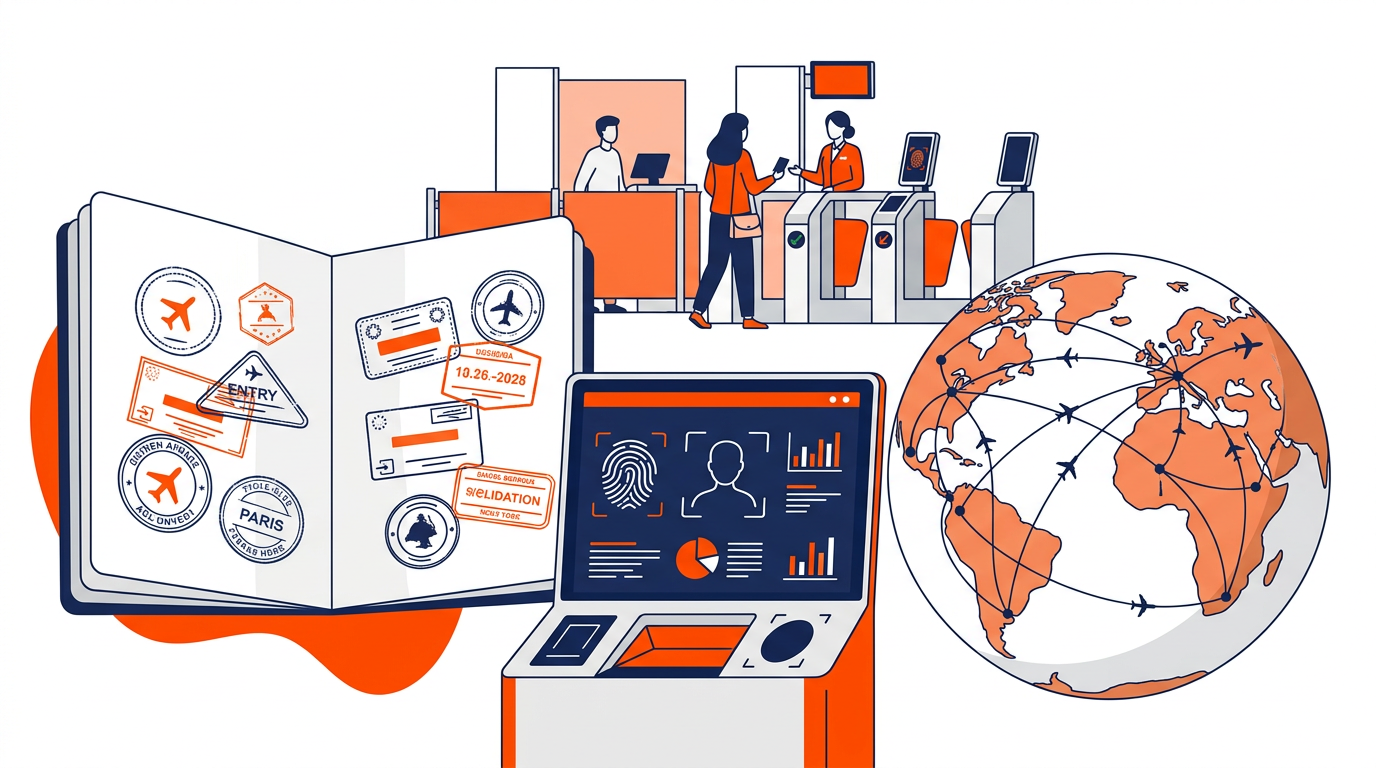
Passport Strength & Entry Procedures 2026: Why Visa-Free Doesn't Mean Effortless
You have a "strong" passport. You booked a visa-free destination. You expect to walk off the plane, flash your passport, and be through border control in five minutes.
Then you land, and reality is different. Biometric scanners ask for your fingerprints. An officer asks where you are staying. Another one wants proof of a return ticket. A digital arrival card you forgot to fill in costs you 40 minutes in a separate queue. Somewhere in the middle of all this, your phone dies, and without mobile data you cannot even show the hotel booking on your email.
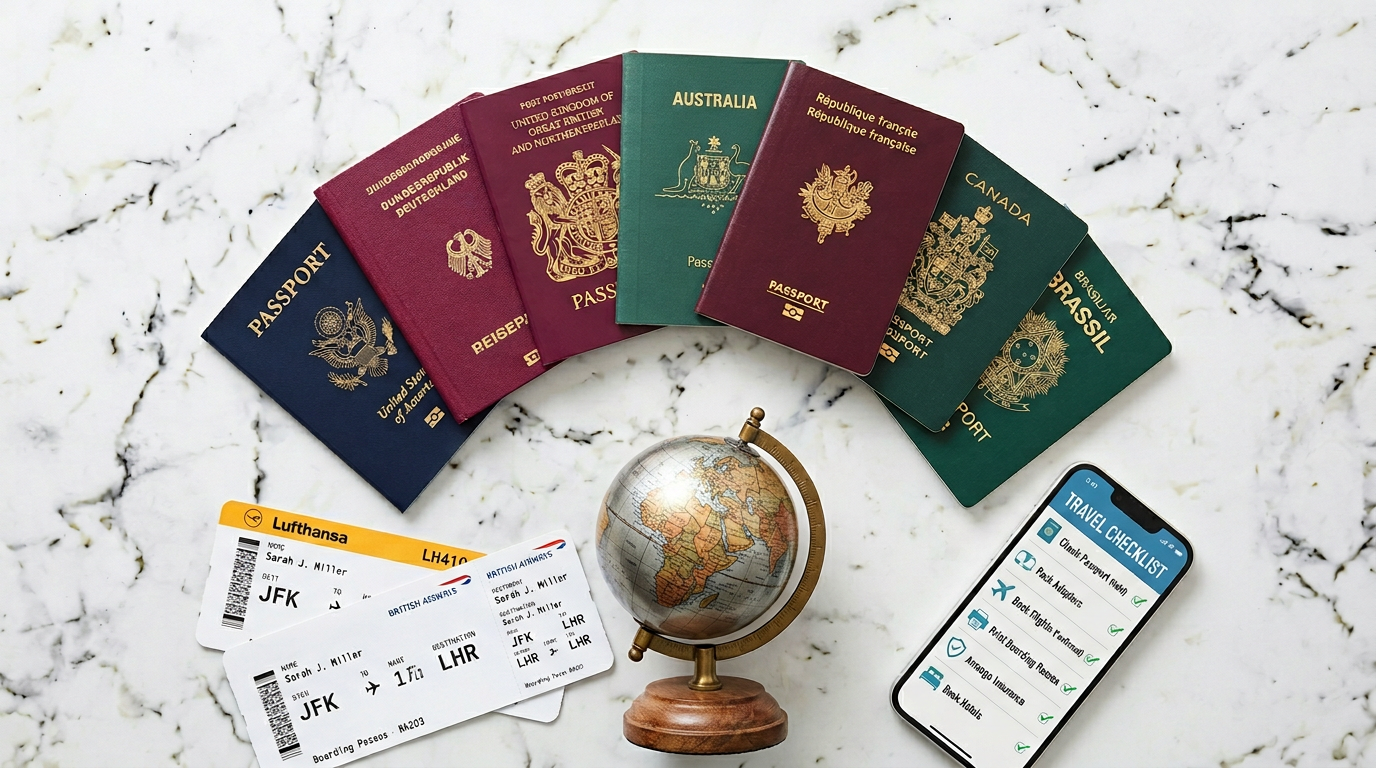
Welcome to 2026. Visa-free is not gone — but it has changed. Passports are still ranked by their visa-free reach, but the procedures that come with entering a country, even a visa-free one, have grown significantly. ETIAS is launching in Europe. The EES biometric system went fully operational in April 2026. The US requires ESTA, the UK requires ETA, and a growing list of countries now demand digital arrival cards filled in before you land.
This guide covers the 2026 passport ranking, the new entry systems you need to know about, and the real procedures at 10 of the world's most popular tourist destinations — so you are not the traveler holding up the queue. And because every entry procedure works smoother when you land with working internet, get a UpApp eSIM before you fly and skip the airport SIM kiosk.
The 2026 Passport Power Ranking (Henley Index)
Passport strength is measured by how many destinations a holder can enter visa-free or with visa-on-arrival. The Henley Passport Index, updated quarterly using IATA data, is the most widely cited benchmark. Here is the 2026 top 10:
| Rank | Country | Visa-Free Destinations |
|---|---|---|
| 1 | Singapore | 192 |
| 2 | Japan, South Korea | 190 |
| 3 | Sweden | 186 |
| 4 | Belgium, Denmark, Finland, France, Germany, Ireland, Italy, Luxembourg, Netherlands, Norway, Spain, Switzerland | 185 |
| 5 | UAE | 184 |
| 6 | Croatia, Czech Republic, Estonia, Malta, New Zealand, Poland, United Kingdom | 183 |
| 7 | Australia, Latvia, Liechtenstein | 182 |
| 8 | Canada, Iceland, Lithuania | 181 |
| 9 | Malaysia | 180 |
| 10 | United States | 179 |
What Changed in the 2026 Passport Rankings
A few notable shifts compared to previous years. Singapore kept the top spot for the second year in a row, with visa-free access to 192 destinations. Japan and South Korea moved to joint second with 190. The UAE has had the most dramatic 20-year rise of any country — climbing 57 places since 2006 to reach 5th in 2026 through aggressive diplomatic engagement.
The United States fell to 10th place, down six positions from its early-2000s peak at 4th. The UK also dropped, now at 6th. The shift reflects not only changes in visa policy toward US and UK citizens abroad, but also political signals in both countries that affected reciprocal agreements.
Key insight: For residents of Croatia (ranked 6th), Germany (4th), and the United States (10th), visa-free access covers the vast majority of popular tourist destinations. But visa-free is not the same as procedure-free.
What "Visa-Free" Actually Means in 2026 (and What It Does Not)
When a country appears on your passport's visa-free list, it means you do not need to apply for a visa in advance through a consulate. What it does not mean:
- That you can stay as long as you want — most visa-free stays cap at 30, 60, or 90 days
- That you can work or study — visa-free entry is for tourism and short business only
- That there is no pre-travel paperwork — increasingly, you need electronic authorizations (ETIAS, ESTA, ETA) before you board
- That you will pass border control without questions — officers can still refuse entry
- That biometrics won't be captured — most major destinations now scan fingerprints and face
The New Entry Systems Every Traveler Needs to Know in 2026
EES — Europe's Entry/Exit Biometric System
EES replaces the old paper passport stamps across the Schengen Area. Since its rollout began on 12 October 2025 and full operation since 10 April 2026, every non-EU visitor's entry and exit is now recorded electronically — including a fingerprint and facial scan on first visit.
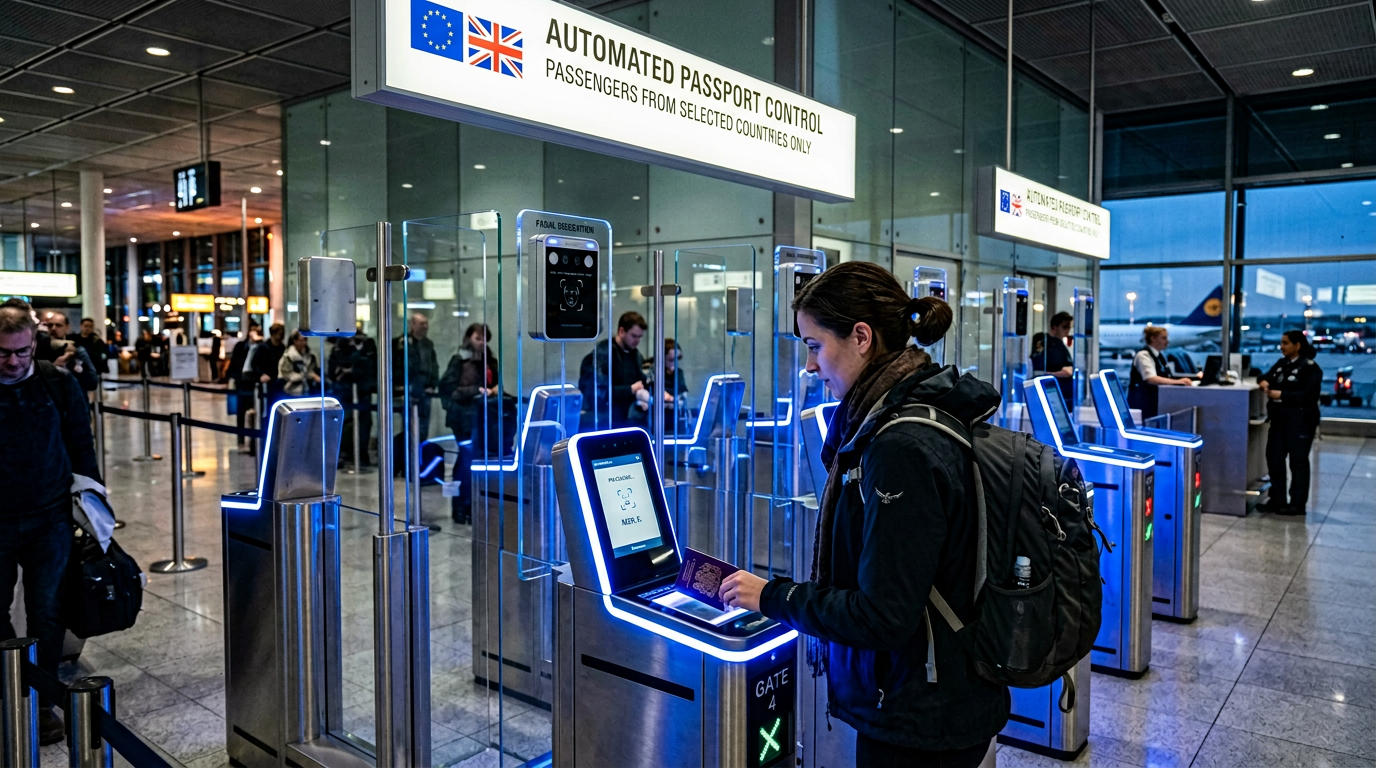
What this means for you: on your first entry after April 2026, expect a few extra minutes at the border for biometric capture. On every entry after that (within 3 years), you scan your fingerprint or face at an automated gate. The 90-in-180-day rule is now enforced automatically — no more hoping the border officer does not notice the stamps.
ETIAS — European Travel Authorization (Launching Q4 2026)
ETIAS is Europe's answer to the US ESTA. Launching in Q4 2026, it will be required for visa-exempt visitors from about 60 countries (US, UK, Canada, Australia, Japan, Brazil, and many more) traveling to 30 European countries.
Key facts: €20 fee, valid for 3 years or until passport expires, applied online, most approvals within minutes. Applied before you board. Note that ETIAS is not yet live at the time of writing — any site taking applications right now is a scam. The official portal will be travel-europe.europa.eu/etias.
ESTA — United States Visa Waiver
ESTA has been around since 2009 but is worth a reminder. Visa Waiver Program nationals (40+ countries, including most of Europe, Japan, South Korea, Australia, New Zealand) must apply online before traveling to the US. Fee is $21. Valid for 2 years or until passport expires. Approval typically within minutes.
ETA — United Kingdom Electronic Travel Authorisation
The UK's Electronic Travel Authorisation rolled out in 2025 and now covers most visa-exempt visitors. £16 fee, valid 2 years, applied online before travel. Needed even for short transits through UK airports.
Digital Arrival Cards Around the World
A growing number of countries now require online arrival forms. Thailand replaced the paper TM6 with the Thailand Digital Arrival Card (TDAC) in 2025. Indonesia (Bali) uses All-in-One Entry. Japan strongly recommends Visit Japan Web, which combines immigration and customs forms into a QR code. Egypt, Vietnam, and many others have similar systems.
Entry Procedures at 10 Popular Tourist Destinations in 2026
Even with a strong passport, each destination has its own quirks. Here is what to expect at some of the most visited spots for 2026:
| Destination | Entry Procedure | Typical Border Time |
|---|---|---|
| Thailand | Visa exemption 60 days for 93 nationalities. TDAC required — fill online within 3 days before arrival. Return ticket often checked. | 5 – 20 min |
| Turkey | Visa-free up to 90 days for most Europeans. Some nationalities need e-Visa online (approx $50). Passport must have 60 days validity beyond stay. | 10 – 30 min |
| Bosnia & Herzegovina | Visa-free 90 days for most Western passports. Registration with police within 48h if not staying in a hotel. | 5 – 15 min |
| Croatia | Schengen rules. 90 days in any 180. From Q4 2026: ETIAS required for non-EU visa-exempt visitors. EES biometric registration since April 2026. | 10 – 45 min |
| United States | ESTA authorization required for Visa Waiver Program nationals ($21, valid 2 years). Applied online at least 72h before travel. | 15 – 60 min |
| United Kingdom | ETA required since 2025 for most visa-exempt visitors (£16, valid 2 years). Applied online before travel. | 10 – 30 min |
| UAE | Visa-on-arrival 30 or 90 days for many nationalities. Biometric capture (face + iris) at border. Passport 6 months validity. | 5 – 20 min |
| Japan | Visa-free 90 days for 71 nationalities. Visit Japan Web digital form recommended. Fingerprints and photo taken at border. | 15 – 45 min |
| Indonesia (Bali) | Visa on Arrival $35 for 30 days, extendable. All-in-One Entry electronic form before arrival. Tourist tax IDR 150,000 for Bali. | 15 – 60 min |
| Egypt | e-Visa online ($25) or visa on arrival at major airports ($25). Passport 6 months validity. Cash USD recommended as backup. | 10 – 40 min |
Passport Validity Rules — The Detail That Ruins International Trips
Every year thousands of travelers are turned away at airports because their passport expires too soon. "Valid" is not enough — most countries require your passport to have a certain number of months of validity beyond your planned return date.
| Destination | Passport Validity Required |
|---|---|
| Schengen Area | 3 months beyond planned departure + issued within last 10 years |
| United Kingdom | Must be valid for duration of stay |
| United States | 6 months beyond stay (automatic extension for some countries) |
| Thailand, Vietnam, Indonesia | 6 months from date of entry |
| Turkey | 60 days beyond 90-day visa-free period |
| UAE, Saudi Arabia, Egypt | 6 months from date of entry |
| Japan, South Korea | Valid for duration of stay |
| Brazil, Argentina, Mexico | Valid for duration of stay |
Additional Schengen detail that catches travelers off guard: your passport must have been issued within the last 10 years. A passport that was renewed with carried-over validity beyond 10 years (common in some UK and older EU passports) will be rejected at Schengen borders, even if it shows a valid expiration date.
The Airport International Entry Process: What Actually Happens
Even for a visa-free entry, here is the typical sequence at a modern international airport in 2026:
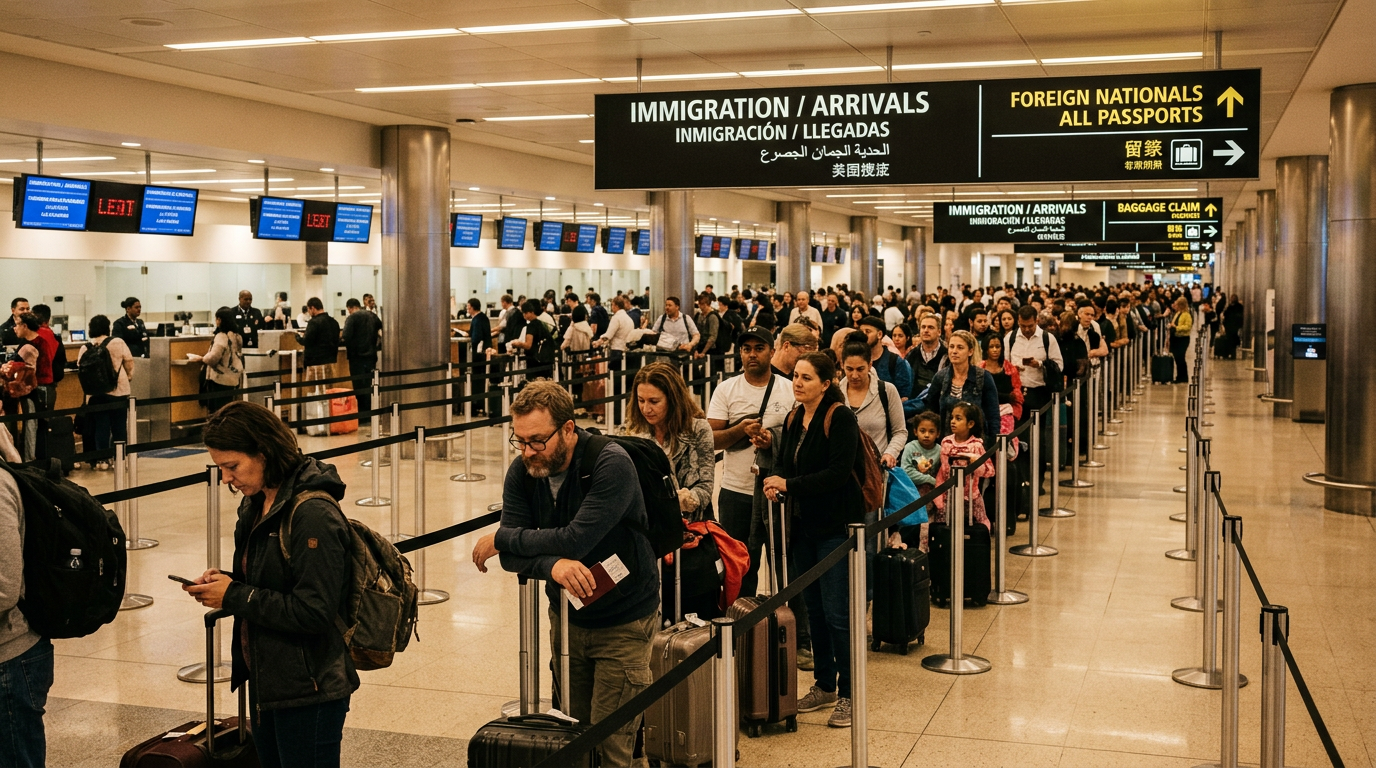
- Disembarkation and walk to immigration. Large airports can add 15 to 30 minutes of walking.
- Queue selection. Automated gates (e-gates) vs manual booths. E-gates are faster but require biometric chip passports and enrollment.
- Biometric capture. Fingerprints, facial scan, or both. UAE adds iris scan. Japan captures fingerprints and face. Schengen EES since April 2026.
- Document checks. Passport, authorization (ETIAS/ESTA/ETA), digital arrival card QR, sometimes return ticket and accommodation proof.
- Questioning (random). Purpose of visit, length of stay, where you are staying. Brief for most, detailed for some.
- Entry stamp or digital record. Still a physical stamp in some places. In Schengen, replaced by the EES digital record.
- Customs. Green/red channel or digital customs declaration.
Pre-Travel Checklist: What to Do 2 – 4 Weeks Before Your International Trip
- Check your passport expires at least 6 months after your planned return (safest default)
- Verify your passport was issued within the last 10 years if traveling to Schengen
- Check if your destination requires an electronic authorization (ETIAS, ESTA, ETA) and apply with buffer time
- Save screenshots of approvals, return tickets, and hotel bookings in your phone — offline
- Fill in digital arrival cards in the 72-hour window before landing
- Set up your destination eSIM before you fly so you land with working data
- Know your accommodation address — border officers ask, and "I'll find it" is not an answer
- Carry a printed backup of your critical documents in case your phone dies
Frequently Asked Questions
What is the strongest passport in the world in 2026?
Singapore holds the top spot with visa-free access to 192 destinations, followed by Japan and South Korea tied at 190. Twelve European countries share 4th place with 185 destinations each.
Do I need ETIAS to visit Europe as an American in 2026?
Yes, from Q4 2026. US citizens will need ETIAS (€20, valid 3 years) before visiting any of the 30 participating European countries. It is not a visa — Americans still travel visa-free — but pre-travel authorization is required.
What is the EES biometric system and do I need to register?
EES (Entry/Exit System) is Europe's biometric border system that replaced paper passport stamps. You do not apply — registration happens automatically at your first Schengen entry after 12 October 2025. It is free. On first entry, expect fingerprint and facial scan capture.
How early should I arrive at the airport for international travel in 2026?
With EES, ETIAS, biometric scans, and digital arrival cards in the mix, 3 hours before an international flight is the new minimum. 4 hours during peak travel season.
Can I be denied entry even with a visa-free passport?
Yes. Visa-free means you do not need to apply for a visa in advance, but border officers have the final say. You can be denied for insufficient funds, suspicious travel history, no return ticket, lack of accommodation proof, or previous overstays.
What if my passport expires during my international trip?
Many countries require 3 to 6 months of validity beyond your departure date — not just beyond your arrival. A passport expiring during your trip will get you turned away at check-in, not even at the destination. Always renew early.
Are paper passport stamps gone in Europe?
In Schengen — yes, replaced by EES since April 2026. In most of the rest of the world, physical stamps are still used, though many countries are transitioning to digital records.
The Bottom Line: Passport Strength and Entry Rules in 2026
A strong passport opens doors, but it no longer opens them automatically. Visa-free travel in 2026 comes with ETIAS, ESTA, ETA, EES, biometric scans, digital arrival cards, and passport validity rules that change by destination.
The good news: most of this can be handled in 30 minutes at home, before you fly. The bad news: traveling without preparation — the way it worked a decade ago — increasingly means missed flights, denied boarding, or hours stuck in secondary inspection.
Treat pre-travel paperwork as seriously as packing. Check your passport validity, apply for the right electronic authorization, fill in digital arrival cards in the 72-hour window, and set up mobile data before you land. The difference between a smooth arrival and a stressful one often comes down to 20 minutes of admin the week before your flight.
Browse UpApp eSIM plans for 170+ countries or explore our regional multi-country packages for trips that cross borders. Activate in 30 seconds with our setup guide — and land connected, ready to show your hotel booking, pull up your digital arrival card, or book a taxi before you even reach customs.